No sense trying to send a Duck To Eagle School, if its Eagles you seek to work with…………..

Average people/companies don’t become phenomenal. Phenomenal people/companies ARE phenomenal. They are because they live the motto of: “the ONLY way it will be is BECAUSE of me/us ”as paraphrased by fsm

So no sense trying to send a duck to eagle school, if you want to soar with eagles.

AT TMC The Mahr Company: Our greatest accomplishment for you is not behind us, it is yet to be. Your goals and commercial real estate needs, whatever they may be, wherever they make take us and whatever they may require, is our commitment to you.

http://tinyurl.com/kkd7bg3

NOI – Net Operating Income in Commercial Real Estate

NOI

Understanding Net Operating Income in Commercial Real Estate

Understanding net operating income (NOI) is essential when it comes to investment commercial real estate. Without a firm grasp of net operating income, commonly referred to as just “NOI”, it’s impossible to fully understand investment real estate transactions. In this article we’ll take a closer look at net operating income, discuss the components of NOI, and also clear up some common misconceptions.

Net Operating Income Formula

Net operating income (NOI) is simply the annual income generated by an income-producing property after taking into account all income collected from operations, and deducting all expenses incurred from operations. The net operating income formula is as follows:

Net Operating Income

Net operating income is positive when operating income exceeds gross operating expenses, and negative when operating expenses exceed gross operating income. For the purposes of real estate analysis, NOI can either be based on historical financial statement data, or instead based on forward-looking estimates for future years (also known as a proforma).

Net operating income measures the ability of a property to produce an income stream from operation. Unlike the cash flow before tax (CFBT) figure calculated on a typical real estate proforma, the net operating income figure excludes any financing or tax costs incurred by the owner/investor. In other words, the net operating income is unique to the property, rather than the investor.

Net Operating Income and Lease Analysis

Before we go over each of the components of NOI, let’s first take a quick detour into the world of commercial real estate leases. Lease analysis is the first step in analyzing any income-producing property since it identifies both the main source of income as well as who pays for which expenses. As you can see from the net operating income formula above, understanding this is essential to calculating NOI.

While there are many industry terms for different real estate leases, such as the modified gross lease, triple net lease, or the full service lease, it’s important to understand that these terms all have various meanings depending on who you are talking to and which part of the world you are in. It’s critical to remember that you must read each individual lease in order to fully understand its structure.

At a high level, leases can be viewed on a spectrum of possible structures. On the one hand you have absolute gross leases where the owner pays all of the operating expenses related to the property. On the other hand you have absolute net leases, where the tenant is required to pay all operating expenses. Everything else falls in between these two extremes and is considered a negotiated or hybrid lease.

How to Calculate Net Operating Income (NOI)

Calculating net operating income is relatively straightforward once you break out each of the individual components. The components of net operating income consist of potential rental income, vacancy and credit losses, other income, and operating expenses.

Potential Rental Income – Potential Rental Income, or just PRI, is the sum of all rents under the terms of each lease, assuming the property is 100% occupied. If the property is not 100% occupied, then a market based rent is used based on lease rates and terms of comparable properties.

Vacancy and Credit Losses – Vacancy and credit losses consist of income lost due to tenants vacating the property and/or tenants defaulting (not paying) their lease payments. For the purposes of calculating NOI, the vacancy factor can be calculated based on current lease expirations as well as market driven figures using comparable property vacancies.

Effective Rental Income – Effective rental income in the net operating income formula above is simply potential rental income less vacancy and credit losses. This is the amount of rental income that the owner can reasonably expect to collect.

Other Income – A property may also collect income other than rent derived from the space tenants occupy. This is classified as Other Income, and could include billboard/signage, parking, laundry, vending, etc.

Gross Operating Income – This is simply the total of all income generated from the property, after considering a reasonable vacancy and credit loss factor, as well as all other additional income generated by the property.

Operating Expenses – Operating expenses include all cash expenditures required to operate the property and command market rents. Common commercial real estate operating expenses include real estate and personal property taxes, property insurance, management fees (on or off-site), repairs and maintenance, utilities, and other miscellaneous expenses (accounting, legal, etc.).

Net Operating Income – As shown in the net operating income formula above, net operating income is the final result, which is simply gross operating income less operating expenses.

What’s Not Included in Net Operating Income

It’s also important to note that there are some expenses that are typically excluded from the net operating income figure.

Debt Service – Financing costs are specific to the owner/investor and as such are not included in calculating NOI.

Depreciation – Depreciation is not an actual cash outflow, but rather an accounting entry and therefore is not included in the NOI calculation.

Income Taxes – Since income taxes are specific to the owner/investor they are also excluded from the net operating income calculation.

Tenant Improvements – Tenant improvements, often abbreviated as just “TI”, include construction within a tenants usable space to make the space viable for the tenant’s specific use.

Leasing Commissions – Commissions are the fees paid to real estate agents/brokers involved in leasing the space.

Reserves for Replacement – Reserves are funds set aside for major future maintenance items, such as a roof replacement, or air conditioning repair. While the textbook definitions of NOI usually exclude reserves from the NOI calculation, in practice many analysts actually do include reserves for replacement in NOI. For example, most lenders will include reserves for replacement into the NOI calculation for determining debt service coverage and the maximum loan amount. This makes sense because lenders need to understand the ability of a property to service debt, which of course has to take into account required capital expenses to keep the property competitive in the marketplace.

Capital Expenditures – Capital expenditures are expenses that occur irregularly for major repairs and replacements, which are usually funded by a reserve for replacement. Note that capital expenditures are major repairs and replacements, such as replacing the HVAC system in a property. This does not include minor repairs and maintenance which are considered an operating expense, such as replacing doorknobs and lightbulbs.

While many of the above items are almost always excluded from net operating income, it’s important to remember that some are open to interpretation depending on the context. Keep this in mind when building your own proformas and when evaluating NOI calculations performed by others.

Net Operating Income Example

The following is an example of a typical real estate proforma that would be commonly used by lenders, investors, developers, brokers and appraisers. It breaks out how net operating income is calculated and presented for an example warehouse property.

Net Operating Income Example

shown above the net operating income line follows the above NOI formula by deducting vacancy and credit loss from gross potential rental income, then subtracting out all operating expenses. Also, note that the debt service and leasing commission expenses are not included in the NOI calculation.

Article Sourced at: http://www.propertymetrics.com/blog/2014/03/05/net-operating-income

TMC: The Courage and Conviction to take Focused Action = RESULTS……

“In whatever areas of life or endeavor, one may meet the challenges of courage. Whatever may be the sacrifices, if one follows his/her conscious; the loss of friends, his/her fortune, his/her commitment, even the esteem of fellow men….Each person must decide for him/herself the course he/she will follow. The studies of past can define that ingredient, they can teach, they can offer hope, they can provide inspiration, but they cannot supply courage itself. For this, each person must look into their soul and take action thereon.” JFK
paraphrased by fsm from a quote by Caroline Kennedy, his daughter, in her book, “Profiles In Courage For Our Times.”
Action Pablo Picasso

“Instead of thinking outside of the box, get rid of the box………”

TMC Real Estate Words1f

Types of Rent…………………..

TMC-TheMahrCompany's avatarTMC-The Mahr Company Blog

Rent $

Among the most common questions asked by our clients is, “So what is the total gross rent that we will be paying?”  The answer to this question starts by stating that each building can be slightly different and most landlords have different definitions as to what constitutes gross rent for the space they are leasing.

The simplest approach as far as tenants are concerned, gross rent will include all real estate costs associated with renting a space ( except sales tax in Florida):

  • Base Rent
  • Property Taxes
  • Building Insurance ( Landlord’s)
  • Common Area Maintenance (CAM’s)
  • Building Management
  • Parking Costs
  • Gas & Electric Utilities
  • Janitorial
  • Trash Removal
  • Tenant Insurance
  • Tenant Improvements

1. Gross Rent Example Two (Modified Gross “MG”): Base Rent + Additional Rent (Utilities?) = Gross Rent Additional Rent varies from property to property, so always ask what additional rent includes. Gross Rent / 12 months = Monthly Gross Rent

View original post 419 more words

Types of Rent…………………..

Rent $

Among the most common questions asked by our clients is, “So what is the total gross rent that we will be paying?”  The answer to this question starts by stating that each building can be slightly different and most landlords have different definitions as to what constitutes gross rent for the space they are leasing.

The simplest approach as far as tenants are concerned, gross rent will include all real estate costs associated with renting a space ( except sales tax in Florida):

  • Base Rent
  • Property Taxes
  • Building Insurance ( Landlord’s)
  • Common Area Maintenance (CAM’s)
  • Building Management
  • Parking Costs
  • Gas & Electric Utilities
  • Janitorial
  • Trash Removal
  • Tenant Insurance
  • Tenant Improvements

1. Gross Rent Example Two (Modified Gross “MG”): Base Rent + Additional Rent (Utilities?) = Gross Rent Additional Rent varies from property to property, so always ask what additional rent includes. Gross Rent / 12 months = Monthly Gross Rent

  • Example One (Triple Net “NNN”): Base Rent + NNN = Gross Rent NNN = Taxes + Building Insurance + CAM’s Gross Rent / 12 months = Monthly Gross Rent
  • These costs are not always clearly laid out in the marketing material of various property listings and some of the costs vary broadly from property to property (i.e. taxes on office/flex space vs downtown office space). In addition, some of these costs are entirely founded in what the tenant may require and are outside of the landlord’s control. Items like data wiring or tenant specific improvements need to be assessed prior to finalizing any deal and signing a lease. We define these costs by placing them into two categories: gross rent & variable costs.
  • Will you please send me a breakdown of your NNN’s or additional rent?
  • Do these expenses include items like management, gas & electric utilities?
  • If gas & electric utilities are not included, how are they charged? Are they seperately metered or pro-rated?
  • Can you send me a 12-month average if utilities are not included? (This information can also be achieved by calling the utility provider for the building.)Variable costs are paid by the tenant, either directly, or indirectly as they are assumed in the rent as offered. Some of the costs are defined below:

2. Variable Costs

  • Tenant Improvements: Some spaces are ready “turn-key”; the tenant signs the lease, grabs the keys and moves right in. Other spaces require a build-out, meaning that to prepare the space to meet the tenants needs, the landlord and tenant must negotiate who will pay for and be responsible for completing a certain amount of finish.
  • Telephone/Data: Always carefully review your costs as they are associated to your connectivity. Some buildings are wired with access to high speed internet while others do not have a major service provider like Comcast or Century Link. Keep in mind data costs will vary broadly as service providers have different definitions of “high speed.” Make sure you are comparing this real cost to weigh your options when looking at various properties!
  • Landlord Incentives: I find it is often overlooked that landlords may offer incentives. These discounted costs deviate from one building and it’s landlord to another, but always keep in mind to ask.
  • As you can see, there is no straightforward answer regarding what gross rent does and does not include. Whether you are a tenant or a landlord, these costs should be clearly defined in your lease agreement. Sourced by the Colorado Group

TMC-The Mahr Company : 4 July 2014


“WE hold these Truths to be self-evident, that all Men are created equal, that they are endowed by their Creator with certain unalienable Rights, that among these are Life, Liberty, and the Pursuit of Happiness”

John Hancock, President of Congress was the first to sign the Declaration of Independence, writing his name in large, plain letters and saying:

“There! John Bull can read my name without spectacles. Now let him double the price on my head, for this is my defiance”

Then he turned to the other members, and solemnly declared:

“We must be unanimous. There must be no pulling different ways. We must all hang together”

“Yes” said Franklin, quaintly. “we must all hang together, or most assuredly we shall all hang separately”

There were 58 members of the 2nd continental congress. On July 1st, 1776 12 of the 13 Colonies voted in favor of Richard Henry Lee’s motion of independence (New York had to get permission). After 2 days of revising the language, congress and all 13 colonies officially adopted the Declaration of Independence on July 4th. Later to be signed by 56 of the 58 members. The 2nd continental congress knew their fate that day, war was inevitable. Yet each and every one of them placed their individual freedom above their own lives, and in so doing, placed our freedom, and the freedom of our country, right there alongside their own.

For 238 years, men and women, daughters, sons, mothers, fathers, family, friends, and people we will never know, have been defending our freedoms with the same resolve, the same dedication, and the same sacrifice as the 56 signers of the Declaration of Independence were willing to make that fateful July 4th afternoon in Philadelphia. As we all gather this weekend with family, friends, and loved ones, take a moment to remember the anniversary of our independence, and our forefathers who made our freedoms possible. More importantly, those who have served to preserve our freedoms…. our Lives, our Liberty, and all that is ours to cherish

We all have someone to remember and to thank, and in special recognition, lets join in honoring all of our neighbors, friends and family having served and assumed a post in the defense and preservation of our freedom. Most humbly…Thank you! authored by Tom Tolworthy, CEO Twinlab

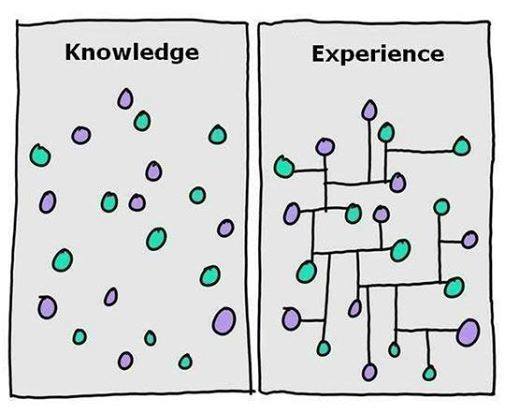
TMC-The Mahr Company: Connecting the Dots

TMC-The Mahr Company We Connect the Dots………..Lots of them in our service to you

TMC-The Mahr Company offering the highest level of professional service with attention to detail

Connect The DotsYour goals and commercial real estate needs, whatever they may be, wherever they make take us and whatever they may require are our commitment to you.


TMC-The Mahr Company offering the highest level of professional service with attention to detail

Image

graphic by: Andre J. van Rensburg

TMC- The Mahr Company Your goals and commercial real estate needs, whatever they may be, wherever they make take us and whatever they may require are our commitment to you.

First 1/4 – 2014 Quartelrly Market Trends

TMC shares the latest quarterly market trends for 1st quarter 2014